

By the Three Palms Property Management team, San Diego property management experts · Updated August 2026
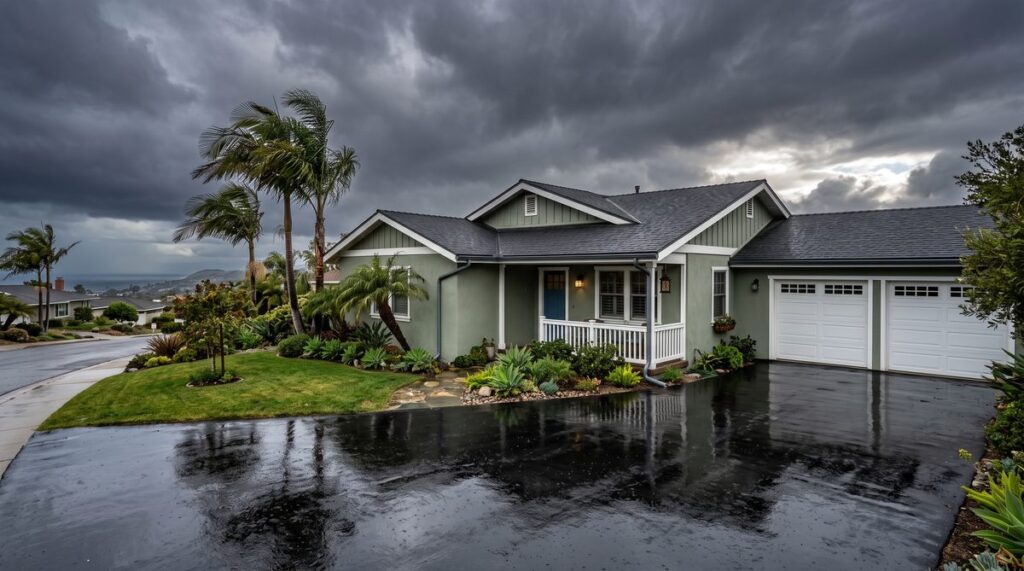
San Diego does not get hurricanes, but a single winter atmospheric river can dump weeks of rain in a day, and owners who assume “it never floods here” are the ones scrambling for sandbags at midnight. Recent winters have flooded San Diego streets and homes, damaged roofs in Santa Ana winds, and turned deferred maintenance into insurance claims. Storm-proofing your rental is not paranoia, it is the difference between a wet driveway and a flooded unit with displaced tenants.
This guide shows San Diego rental owners how to storm-proof a property before winter: protecting against flooding and wind, building a simple emergency plan, understanding what insurance does and does not cover, and knowing what to do the moment a storm passes. Most of it is inexpensive and preventive, and all of it is cheaper than the damage it avoids.
Do San Diego rentals really face storm risk?
Yes. Despite the mild reputation, San Diego faces real winter storm risk from heavy rain, atmospheric rivers, localized flooding, and seasonal winds. When a strong system stalls over the county, rainfall totals can overwhelm drains and gutters in hours, and low-lying or poorly drained properties flood quickly.
Wind is the other half of the risk. San Diego’s seasonal winds, including Santa Ana events, can bring down branches, lift roofing, and topple fences, and a saturated ground makes trees more likely to fall. Neither risk is constant, but both are predictable enough that preparation is straightforward and worthwhile.
For owners, the point is not to expect a catastrophe, it is to recognize that the county sees a handful of serious storms most winters. Preparing for the ones that come is far cheaper than repairing the damage from the one you ignored.
How do you protect a San Diego rental from flooding?
You protect a rental from flooding by making sure water drains away from the building and cannot pool against it. Confirm the roof is sound, clear the gutters and downspouts so they carry water away, and check that the grading around the property slopes away from the foundation rather than toward it.
For properties with any history of pooling, keep sandbags or flood barriers on hand and know where water tends to collect, so you can direct it away before a storm rather than during one. Seal gaps around doors, windows, and the foundation, clear any yard or street drains near the property, and if the property has a sump pump or below-grade space, test that it works before the season starts.
The goal is a clear, tested path for water to leave the property. Most San Diego flood damage in homes comes not from rivers overtopping, but from local drainage failing, and that is exactly what an owner can prevent with a few hours of fall preparation.
How do you protect against wind and tree damage?
You protect against wind and tree damage by removing hazards before the wind arrives. Trim back overhanging and dead tree limbs, especially any near the roof, power lines, or where they could fall on the structure or a car, because saturated soil and strong gusts bring down weak branches first.
Secure or store loose exterior items that can become projectiles, such as patio furniture, trash bins, and yard decor, and check that fences, gates, and any rooftop equipment are sound and well-anchored. Inspect the roof for loose shingles or flashing that wind can peel back, since a small existing defect is where wind damage usually starts.
These steps take an afternoon and prevent the most common wind-related claims. A dead branch removed in October does not crash through a bedroom window in January.
What should a storm emergency plan include?
A storm emergency plan should cover how to shut off utilities, who to call, and what supplies are on hand before a storm hits. Know and label the locations of the main water shutoff, the electrical panel, and the gas shutoff, so a problem can be stopped fast, and make sure your tenants know them too.
Keep a basic kit accessible: flashlights and batteries, sandbags or barriers for flood-prone spots, basic tools, and a current list of emergency and vendor contacts, including a plumber, a roofer, and a water-mitigation company you trust. Having those numbers ready before a storm means a fast response instead of a frantic search while water spreads.
The plan does not need to be elaborate. It needs to answer, in advance, the three questions that matter in a storm: how do I stop the water, who do I call, and what do I have on hand.
What should tenants know before a storm?
Tenants should know how to shut off the water, how to reach you or your manager urgently, and to report any leak the moment it starts. Your tenant is on-site when a storm hits, so a quick pre-season message turning them into an informed first responder is one of the most valuable things you can do.
Tell them where the main water shutoff is, how to reach emergency maintenance, and to call immediately about any leak, flooding, or downed branch rather than waiting. Remind them of basic storm safety, including never driving through flooded roadways, and where to go if the unit becomes unsafe. A tenant who calls at the first drip saves you from discovering a soaked, moldy unit days later.
This communication costs nothing and dramatically shortens response time. The fastest storm response always starts with the person already standing in the building.
Does your insurance cover storm and flood damage?
Storm-related wind and rain damage is often covered by a standard landlord policy, but flood damage is typically excluded and requires separate flood insurance. This distinction surprises many owners after the fact: a wind-driven roof leak may be covered, while rising-water flooding usually is not unless you carry a dedicated flood policy.
Review your coverage before the season, not after a loss. Confirm what your landlord policy includes for wind and water damage, understand your deductibles, and consider whether your property’s flood risk warrants a separate flood policy. Document your property’s condition with dated photos now, so you have a clear baseline if you ever need to file a claim.
This is general information, not insurance advice. Coverage varies by policy and property, so confirm your specific protection with a licensed insurance professional before the storm season arrives.
What do you do after a storm hits?
After a storm, act fast to document the damage and stop it from getting worse, because prompt mitigation protects both the property and your insurance claim. Photograph and record all damage before you clean up, then take reasonable steps to prevent further harm, such as tarping a roof leak or extracting standing water, since most policies expect you to mitigate.
Contact your insurer promptly if the damage is significant, and bring in trusted vendors quickly, because water damage worsens by the hour and mold can follow within days. If the unit’s habitability is affected, address it immediately, both for your tenant’s safety and to meet your legal obligations as an owner.
The owners who recover fastest are the ones who documented, mitigated, and called the right people right away. A methodical post-storm response turns a bad day into a managed repair rather than a spiraling loss.
What is the San Diego storm-proofing checklist?
Work through this list before storm season:
- Clear roof, gutters, and drains so water flows away from the building.
- Check grading and pooling and stage sandbags for known trouble spots.
- Trim trees and dead limbs, especially near the roof and power lines.
- Secure loose exterior items that wind could turn into projectiles.
- Label utility shutoffs and confirm tenants know their locations.
- Build an emergency kit and contact list, including mitigation vendors.
- Review insurance coverage and document the property with dated photos.
- Brief tenants on shutoffs, emergency contacts, and reporting leaks fast.
Run this before the first system arrives, because every item is far easier to handle in dry weather than in the middle of a storm.
How does professional management keep a rental storm-ready?
Professional management keeps a rental storm-ready by handling preventive preparation, maintaining vendor relationships, and responding immediately when a storm hits, so damage is prevented or contained fast. A property manager clears drainage, trims hazards, reviews readiness, and keeps a trusted network of plumbers, roofers, and mitigation crews on call, which is exactly what turns a storm from a disaster into a manageable event.
That readiness matters most in the moments an owner cannot be everywhere at once. When a system rolls in, the owner with professional management has already prepared the property and has a team ready to respond, while the self-managing owner is searching for an available plumber at 11 p.m.
If you want your San Diego rental ready for whatever winter brings, request a free rental analysis from Three Palms Property Management. We storm-proof your property before the season, keep reliable emergency vendors on call, respond fast when weather hits, and protect both your asset and your tenants when it matters most.
Frequently asked questions about storm-proofing a San Diego rental
Do San Diego rentals need storm protection?
Yes. San Diego sees heavy winter rain, atmospheric rivers, localized flooding, and seasonal winds most years. Preparing drainage, trimming trees, and building an emergency plan prevents the water and wind damage that these storms commonly cause.
How do I prevent my rental from flooding?
Keep water draining away from the building: clear the roof, gutters, and downspouts, confirm the grading slopes away from the foundation, stage sandbags at known pooling spots, and test any sump pump. Most home flood damage comes from local drainage failing, which is preventable.
Does landlord insurance cover flood damage?
Usually not. Standard landlord policies often cover wind and some water damage but typically exclude flooding, which requires separate flood insurance. Review your coverage and deductibles before the season and confirm your specific protection with a licensed insurance professional.
What should tenants do during a storm?
Tenants should know where the water shutoff is, report any leak or flooding immediately, avoid driving through flooded roads, and know how to reach emergency maintenance. An informed tenant on-site is your fastest line of defense against escalating damage.
What should I do after storm damage?
Document the damage with photos before cleanup, take reasonable steps to prevent further harm such as tarping or water extraction, contact your insurer if the loss is significant, and bring in trusted vendors quickly. If habitability is affected, address it right away.
This article is for general informational purposes only and is not insurance or legal advice. Coverage and habitability obligations vary; confirm your specific policy and responsibilities with a licensed insurance professional and, where appropriate, a qualified attorney.
