

By the Three Palms Rental Management team, San Diego property management experts · Updated August 2026
A single overlooked lease clause can now cost a San Diego owner a habitability claim, a returned deposit dispute, or a rent deduction they never approved. The new California rental laws 2026 package that takes effect on January 1 rewrites the rules on appliances, deposits, fees, bundled internet, and disaster response all at once. If your lease still reads the way it did in 2024, you are already behind.
This guide walks San Diego County owners through every major change in plain language, what it means for your property, and the exact steps to take before January 1. It is built for owners in North Park, Point Loma, La Jolla, Pacific Beach, Chula Vista, and everywhere in between who want to stay compliant and protect their return.
Why do these 2026 laws matter for San Diego owners?
These laws matter because most of them attach at the moment you sign, renew, or amend a lease, which means the first tenant turnover of 2026 pulls your property into the new rules whether you planned for it or not. Noncompliance is not a slap on the wrist. It can convert a routine deposit return, a standard fee, or a normal appliance repair into a legal dispute with real financial exposure.
California passed a cluster of tenant-protection bills in its 2025 session, and the bulk of them share a January 1, 2026 effective date. For a San Diego owner with even one unit, that concentration is the story: you are not tracking one change, you are tracking six. Getting ahead of them now is far cheaper than reacting to a claim in February.
What does AB 628 require for stoves and refrigerators?
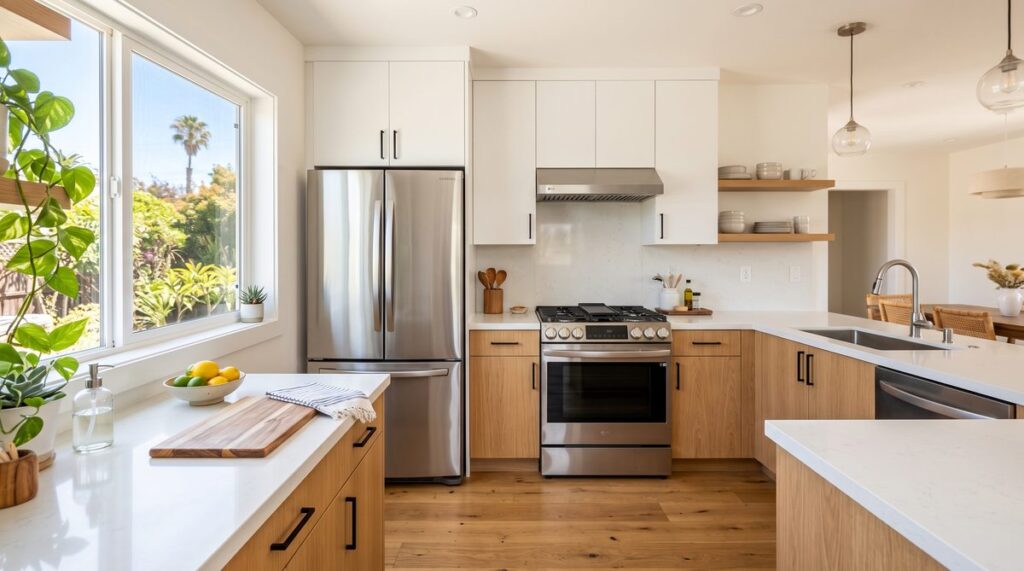
AB 628 is a new California habitability law requiring that every covered residential rental include a working stove and refrigerator for any lease entered into, amended, or renewed on or after January 1, 2026. Once those appliances are provided, the owner is responsible for repairing or replacing them when they fail due to normal use. Communal living arrangements and single-occupancy units with a shared kitchen are generally excepted.
In practice, this closes a gap San Diego tenants have complained about for years: units advertised as “kitchen” that arrived without a fridge or a functioning range. Starting with your first 2026 lease action, a missing or dead appliance is no longer a tenant’s problem to solve. It is a habitability obligation on you.
The financial read is simple. Budget now for appliance condition at every turnover, because an owner who signs a 2026 lease on a unit with a broken stove has signed up for the repair. A quick pre-lease appliance check is far cheaper than an emergency call plus a habitability complaint. You can read the bill text at the California Legislature site.
What changes for security deposits under AB 414?
AB 414 requires that if a tenant paid their security deposit electronically, the owner must return that deposit electronically at move-out, unless both parties agree in writing to a different method. The owner also has to inform the tenant of the right to receive the deposit back electronically. It is a small mechanical change with an outsized dispute-prevention payoff.
Deposit returns are one of the most common flashpoints in San Diego rentals, and “the check got lost” is a recurring excuse that erodes trust and invites claims. AB 414 removes the ambiguity: money in electronically means money out electronically, on time, unless you documented an agreed exception.
For owners, the action is to update your move-out process so the refund method matches the payment method by default, and to add the required notice to your lease and move-out packet. This pairs with California’s existing deposit rules under Civil Code and the state’s broader deposit reforms, so treat it as one more reason to run deposits by the book.
What is the new upfront fee-disclosure rule (AB 747)?
AB 747 ends hidden-fee advertising by requiring owners and property managers to disclose all mandatory fees upfront, including in advertisements, listings, and lease negotiations. A prospective tenant should see the true, all-in cost of the tenancy before they apply, not discover surprise mandatory charges buried in the lease.
This is California’s version of the broader “junk fee” crackdown, applied to rental housing. If your San Diego listing quotes a rent figure but the real monthly obligation includes mandatory add-ons, those add-ons now belong in the ad and the listing.
The compliance move is to audit every mandatory charge you impose and make sure it appears clearly wherever you advertise the unit. Transparency here is not just legal hygiene, it also reduces application drop-off from tenants who feel misled at signing.
Can tenants opt out of your bundled internet under AB 1414?
AB 1414 gives tenants, for tenancies beginning on or after January 1, 2026, the right to opt out of paying for a landlord-bundled third-party internet, phone, or satellite service as a condition of the tenancy. If an owner refuses the opt-out, the tenant may deduct the cost from rent, and the owner cannot retaliate.
If your San Diego property bundles a provider into the rent, this law directly touches your revenue model. You can still offer the service, but you can no longer force a tenant to pay for it as a mandatory condition, and blocking a lawful opt-out invites a rent deduction plus a retaliation claim.
The practical step is to unbundle mandatory third-party services in your 2026 leases and present them as optional. Owners who rely on bundled-service margins should recalculate that math before the new leasing season, because AB 1414 makes the mandatory version legally risky.
What disaster protections does SB 610 add?
SB 610 adds a set of tenant protections that trigger around natural disasters, a category all too familiar in Southern California given wildfire and flood risk. The law requires owners to remove debris from rental properties after a natural disaster, halt rent and other fees during mandatory evacuations, and return prepaid rent and security deposits if a unit becomes uninhabitable.
SB 610 also protects the tenant relationship on the back end. Renters get the right to return to their units after repairs are complete, the ability to terminate a lease on an uninhabitable unit without penalty, and a required notice from the owner once affected units are habitable again.
For San Diego County owners, this is a reason to revisit your insurance, your emergency communication plan, and your lease language around casualty and evacuation. When a fire or flood forces an evacuation, SB 610 sets clear obligations, and the owners who handle them cleanly avoid both legal exposure and reputational damage.
What is the AB 246 Social Security eviction defense?
AB 246 allows a tenant who cannot pay rent because of a verified delay, interruption, or reduction in Social Security benefits to raise an affirmative defense in a nonpayment eviction case. It does not erase the rent owed, but it can slow or complicate an eviction filed against an affected tenant.
For owners, the takeaway is procedural: nonpayment cases involving tenants on Social Security may now carry this defense, so your documentation and your notices have to be airtight. This is exactly the kind of nuance where a small paperwork error can derail a filing.
How does the AB 1482 rent cap still apply in 2026?
AB 1482, the statewide Tenant Protection Act, is not new, but it remains the backbone of rent-increase compliance in 2026. It caps annual rent increases on covered units at the lower of 5% plus the local Consumer Price Index or 10%, and it layers just-cause protections onto qualifying tenancies.
San Diego owners should confirm whether each unit is covered or exempt, then set 2026 increases to the correct local CPI-based ceiling. Getting the cap math wrong is one of the easiest and most avoidable violations, and it is fully within your control. The California Department of Housing and Community Development publishes guidance at hcd.ca.gov.
What should San Diego owners do before January 1, 2026?
Before the new laws take effect, work through a short compliance checklist so your first lease action of 2026 does not become your first violation:
- Inspect appliances at every unit and confirm a working stove and refrigerator before any 2026 lease or renewal (AB 628).
- Update your deposit process so electronic payments are refunded electronically, and add the required notice (AB 414).
- Audit every mandatory fee and disclose it in all ads, listings, and lease materials (AB 747).
- Unbundle third-party internet, phone, and satellite and make it optional in new leases (AB 1414).
- Revisit disaster and casualty clauses plus your evacuation and insurance plan (SB 610).
- Tighten nonpayment documentation, especially for tenants on fixed benefits (AB 246).
- Recheck each unit’s rent-cap status and set 2026 increases to the correct AB 1482 ceiling.
Run this list before your next turnover, not after. Every item above is cheaper to fix as a lease edit than as a legal defense.
How does professional management keep San Diego owners compliant?
Professional management keeps owners compliant by turning a moving target of state law into a standardized, documented process applied to every unit the same way. A local property manager updates lease templates the moment a law changes, standardizes deposit and fee handling, and keeps the paper trail that wins disputes, so a single overlooked clause never becomes a claim.
That is the real value in a year like 2026, when six laws land at once. The owners most exposed are the ones self-managing a unit or two on outdated leases, because they carry all the compliance risk with none of the systems. A manager who lives in San Diego rental law spreads that risk across a process built to absorb it.
The difference shows up at the exact moments that cost money: a clean deposit return, a fully disclosed fee, a compliant rent increase, an evacuation handled by the book. Each one is a dispute that never happens.
If you want your San Diego property ready for every 2026 change without tracking bill numbers yourself, request a free rental analysis from Three Palms Rental Management. We audit your lease and your property against the current law, flag what needs to change before January 1, and manage the compliance so you can focus on the return.
Frequently asked questions about the 2026 California rental laws
When do the new California rental laws take effect in 2026?
Most of the major 2025-session tenant-protection bills, including AB 628, AB 414, AB 747, AB 1414, and SB 610, take effect on January 1, 2026. Several attach at the point you enter, amend, or renew a lease, so your first lease action of the year triggers them.
Do I have to provide a refrigerator and stove in my San Diego rental in 2026?
Yes. Under AB 628, covered residential rentals must include a working stove and refrigerator for leases entered, amended, or renewed on or after January 1, 2026, with limited exceptions for shared-kitchen and communal units. After you provide them, you are responsible for repair or replacement due to normal use.
How must I return a security deposit under AB 414?
If the tenant paid the deposit electronically, AB 414 requires you to return it electronically at move-out unless both parties agree in writing to another method, and you must inform the tenant of that right. Aligning your refund method with the original payment method by default keeps you compliant.
Can a tenant refuse to pay for internet bundled into the rent?
Yes. AB 1414 lets tenants in tenancies starting on or after January 1, 2026 opt out of a landlord-bundled third-party internet, phone, or satellite service. If you refuse the opt-out, the tenant may deduct the cost from rent and you cannot retaliate.
Does AB 1482 still limit rent increases in 2026?
Yes. AB 1482 remains in effect and caps annual increases on covered units at the lower of 5% plus local CPI or 10%, alongside just-cause protections. San Diego owners should confirm each unit’s coverage and set increases to the correct local ceiling.
Disclaimer: This article is for informational purposes only and does not constitute legal advice. Laws change and apply differently to each property and situation. Before acting on any 2026 California rental law, confirm how it applies to your specific property with a qualified California attorney.
