
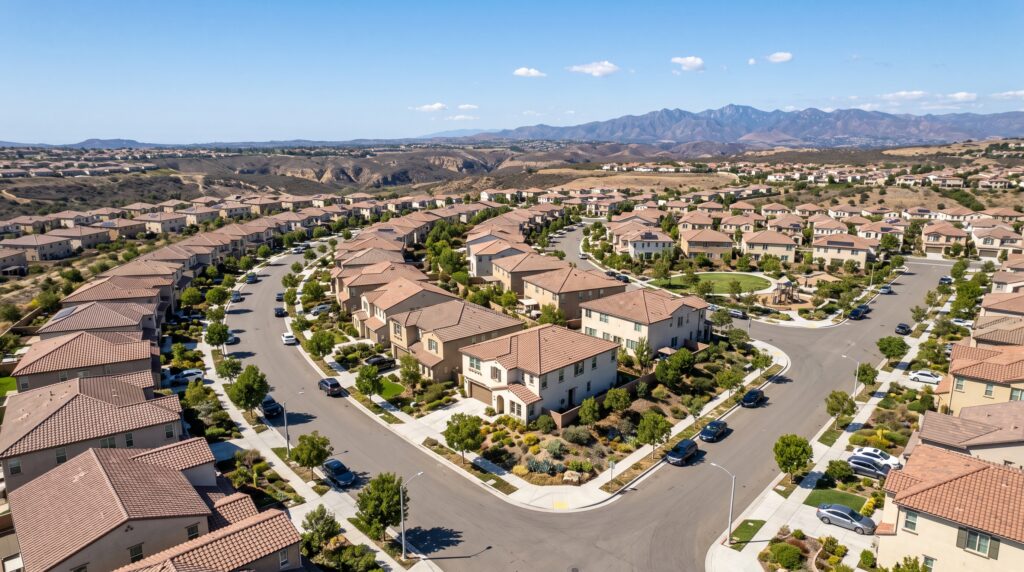
While investors chase trophy properties in La Jolla and Coronado, the smart money is quietly looking south. Chula Vista and the greater South Bay offer something San Diego’s glamorous coastal markets structurally cannot: rental properties where the numbers actually pencil. Lower entry prices, strong and diverse tenant demand, and real growth momentum make the South Bay San Diego’s most underrated cash-flow market heading into 2026. This report explains why the South Bay works for yield-focused investors and how to evaluate a property there like a pro.
Why is the South Bay a cash-flow market?
Cash flow is a math problem, and the math favors the South Bay for one core reason: the relationship between purchase price and rent is far healthier than on the coast. A coastal trophy home carries a purchase price so high relative to its achievable rent that the yield is thin — you buy it for appreciation and prestige, not monthly income. In the South Bay, more moderate acquisition prices sit against solid, steady rents, which is the combination that actually produces positive monthly cash flow.
Chula Vista is San Diego County’s second-largest city, with a large, growing population and a deep base of working families, commuters, and cross-border households who need quality rental housing. That means broad, resilient demand meeting more accessible prices — the foundation of a cash-flow market rather than an appreciation-only one.
What makes Chula Vista and the South Bay attractive in 2026?
Several structural factors line up in the South Bay’s favor:
- Relative affordability. Entry prices are meaningfully lower than San Diego’s coastal and central markets, improving the rent-to-price ratio that drives yield.
- Deep, diverse tenant demand. Working families, dual-income households, commuters, students, and cross-border renters create a wide, stable pool that keeps vacancy low across economic cycles.
- Growth and investment. Areas like eastern Chula Vista and master-planned communities, the Chula Vista Bayfront redevelopment, and the region’s university and civic investment signal long-term momentum, not just current demand.
- Cross-border economy. Proximity to the border and the San Diego–Tijuana economic corridor sustains housing demand that markets further north don’t tap.
- Newer housing stock in parts. Master-planned eastern neighborhoods offer newer construction, which can mean lower maintenance and strong tenant appeal.
The combination is unusual for San Diego: a market with both real current cash flow *and* a credible growth story.
How does the South Bay compare to coastal San Diego for investors?
The contrast clarifies the thesis. Coastal markets (La Jolla, Pacific Beach, Coronado) deliver prestige, high rents, and long-run appreciation — but at purchase prices that compress yield, often into negative monthly cash flow that the investor carries in hopes of appreciation. The South Bay trades some of that appreciation glamour for positive cash flow now and a lower cost of entry.
For a yield-focused investor, that’s often the better trade. Cash flow is money in your pocket every month and a cushion against vacancy and rate changes; appreciation is a bet on the future. The South Bay lets you own San Diego real estate that pays you while you hold it — a fundamentally different, and for many investors more durable, position than a coastal property that costs money every month to keep.
None of this means “South Bay good, coast bad.” It means matching the market to the goal: appreciation and prestige point coastal; cash flow and accessibility point south.
How should you underwrite a South Bay rental?
The South Bay’s advantage only materializes with disciplined underwriting. Evaluate it like the cash-flow play it is:
Anchor rent and price to the specific submarket
The South Bay is not monolithic — eastern Chula Vista’s master-planned communities, western/older Chula Vista, National City, Imperial Beach, and Otay all behave differently. Anchor your rent assumption to comparable units that actually leased in the *specific* neighborhood, and your price to real recent sales there.
Run the full cash-flow model
The whole point is net income, so underwrite every line: purchase price and financing, property taxes (including any Mello-Roos special assessments common in newer master-planned areas — a real and often-missed cost), insurance, HOA where applicable, maintenance, vacancy, and management. The South Bay’s edge is real, but Mello-Roos and HOA fees in newer communities can eat into it if you don’t budget for them.
Underwrite the building’s age honestly
Newer eastern communities mean lower near-term maintenance; older western Chula Vista and National City properties are more affordable but may carry deferred maintenance and older systems. Match your capex reserve to the actual property.
Respect the regulatory framework
South Bay rentals are subject to California’s rent cap (AB 1482) and just-cause rules; some South Bay cities may have their own local ordinances. Confirm what applies before you buy and price.
What property types work best in the South Bay?
The South Bay’s cash-flow edge shows up differently across property types, and matching the type to the strategy sharpens returns. Single-family homes in eastern master-planned communities attract stable, long-tenancy families and command strong rents, though Mello-Roos and HOA costs must be netted out — they’re the cash-flow play for owners who want low turnover and tenant quality. Townhomes and condos offer a lower entry price and a wider buyer pool, but the HOA fee is a fixed drag that has to clear before you profit, so the rent-to-(price+HOA) math is what matters. Small multifamily (duplexes to fourplexes), more common in older western Chula Vista and National City, is often the purest cash-flow vehicle: multiple rent streams under one roof spread vacancy risk and typically produce the healthiest yield per dollar invested, at the cost of older systems and more hands-on management.
The right pick depends on the goal — SFHs for stability and tenant quality, condos/townhomes for lower entry, small multifamily for maximum cash flow. What unites them is the same discipline: underwrite the specific property’s full cost stack (including Mello-Roos, HOA, and capex) against real neighborhood rents before you buy.
What are the risks in the South Bay?
The honest risks: Mello-Roos and HOA costs in newer communities that can erode cash flow if unbudgeted; submarket variation that makes a countywide generalization dangerous (you must underwrite the specific neighborhood); older-stock capex in the more affordable western areas; and appreciation that may trail the coast — this is a cash-flow play, not a bet on the fastest price growth. None of these break the thesis; they’re the reasons South Bay investing rewards local knowledge and honest numbers over assumptions.
Why does professional management strengthen a South Bay investment?
The South Bay’s cash-flow advantage is won or lost in operations, because thin-to-healthy margins depend on keeping the property filled, well-maintained, and compliant. A professional manager anchors rent to the specific submarket, keeps vacancy low across the South Bay’s diverse tenant pool, controls maintenance costs, and ensures compliance with California and any local rules — protecting the exact margin that makes the investment work. A manager with real South Bay knowledge also helps you avoid the countywide-generalization trap by pricing and operating to the specific neighborhood.
For an out-of-area or first-time South Bay investor especially, that local operational expertise is what converts an attractive spreadsheet into realized monthly cash flow.
Frequently asked questions about South Bay investing
Why is Chula Vista good for rental cash flow?
Because purchase prices are more moderate relative to achievable rents than in coastal San Diego, producing a healthier rent-to-price ratio — the core of positive monthly cash flow — alongside deep, diverse tenant demand that keeps vacancy low.
How does the South Bay compare to coastal San Diego for investors?
Coastal markets offer prestige and appreciation but compressed yields and often negative monthly cash flow; the South Bay offers lower entry prices and positive cash flow now, trading some appreciation glamour for money in your pocket each month.
What is Mello-Roos and why does it matter in Chula Vista?
Mello-Roos is a special tax/assessment common in newer master-planned communities (frequent in eastern Chula Vista) that funds infrastructure. It’s a real recurring cost that can erode cash flow, so it must be included in your underwriting.
Is the South Bay subject to rent control?
South Bay rentals fall under California’s AB 1482 rent cap and just-cause protections, and some cities may have additional local rules. Confirm what applies to a specific property before buying and pricing.
Should I buy in eastern or western Chula Vista?
It depends on your goal: eastern master-planned areas offer newer stock and strong tenant appeal (with possible Mello-Roos/HOA costs), while older western Chula Vista and National City are more affordable but may carry more deferred maintenance. Underwrite the specific submarket.
Look south for the cash flow
San Diego’s most underrated rental market isn’t hiding — it’s just south of where everyone else is looking. Chula Vista and the South Bay pair accessible entry prices with deep, resilient tenant demand and real growth momentum, producing the positive monthly cash flow that coastal trophy properties structurally can’t. The edge is real, but it rewards local knowledge and honest underwriting — especially on Mello-Roos, HOA, and submarket variation.
If you’re weighing a Chula Vista or South Bay rental and want a clear-eyed cash-flow model plus local operating expertise, request a free rental analysis from Three Palms Rental Management. We underwrite to the specific submarket, budget the costs others miss, and manage to protect the margin that makes the South Bay work.
