

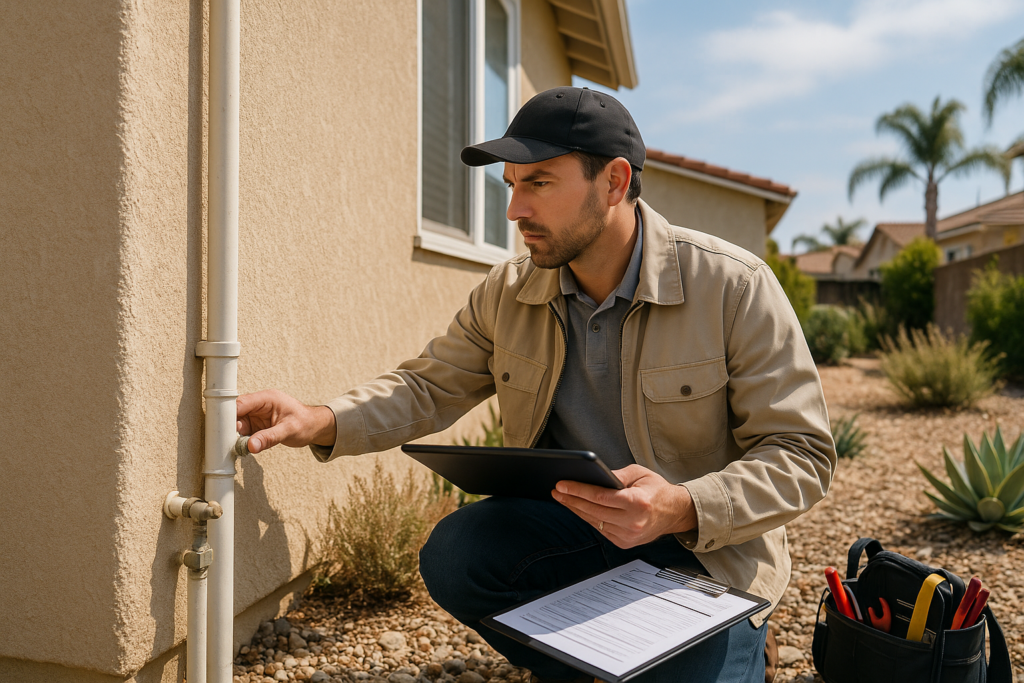
The most expensive repair on a San Diego rental is almost always the one nobody saw coming. A slow leak behind a wall, a failing water heater, a hairline crack in a balcony support, each starts cheap and ends catastrophic, and each is usually invisible until it becomes an emergency. A routine property inspection is the cheapest insurance policy in real estate: a few hundred dollars that regularly heads off five-figure repairs. This is the case for preventive inspections over reactive repairs, and why the math is not close.
What is the difference between preventive and reactive maintenance?
Reactive maintenance is the default for most self-managing owners: you wait until something breaks, then you scramble to fix it. The tenant calls, the problem is already an emergency, and you pay emergency prices for parts, labor, and often the collateral damage the failure caused on its way out.
Preventive maintenance flips the timeline. You inspect the property on a schedule, catch small problems while they are still small, and fix them on your terms, planned, competitively bid, and before they cascade. The difference is not just cost; it is control. Reactive owners are always responding to a crisis. Preventive owners are preventing one.
How does a $300 inspection save a $15,000 repair?
The numbers are illustrative, but the pattern is universal: small problems caught early cost a fraction of the same problems caught late. Consider the classic San Diego failure chains.
- The slow leak. A minor plumbing drip spotted during an inspection is a cheap fix. Left unseen for months, that same drip rots subflooring, warps cabinetry, and breeds mold, and now you are paying for water remediation, mold treatment, and reconstruction, not a washer.
- The tired water heater. A unit flagged as aging and corroding gets replaced on schedule for a known price. The same unit left alone fails, floods the space it sits in, and damages everything around it.
- The exterior element. A balcony, deck, or stairway showing early dry rot is repaired for a modest sum. Ignored, it becomes both a major structural repair and a serious safety and liability exposure.
In every chain, the early intervention is a few hundred dollars and the late one is thousands to tens of thousands. A $300 inspection that catches even one of these before it matures pays for years of inspections in a single save.
What should a rental property inspection actually cover?
A useful inspection is systematic, not a casual walk-through. On a San Diego rental it should cover:
- Plumbing: leaks under sinks and around the water heater, water pressure, signs of moisture or staining.
- Electrical: outlets, panel condition, and obvious hazards.
- HVAC: heating and cooling function, filters, and airflow.
- Roof and exterior: the roof surface, gutters, siding, and, critically for multifamily, balconies, decks, stairways, and railings.
- Moisture and pests: signs of water intrusion, mold, or infestation, which thrive quietly in San Diego’s coastal climate.
- Safety devices: smoke and carbon-monoxide detectors and their function.
- General condition: how the tenant is maintaining the unit and whether the lease terms are being honored.
The goal is to surface the small, fixable problems before they become the large, unavoidable ones, and to document the property’s condition along the way.
How often should you inspect a San Diego rental?
There is no single legal number, but a practical rhythm for most rentals is a move-in inspection, periodic inspections during the tenancy (commonly seasonal or annual), and a move-out inspection: plus targeted checks after events like heavy storms that stress roofs and drainage. Seasonal timing matters in San Diego: pre-winter checks catch roof and drainage issues before the rains, and periodic checks catch the slow, silent failures before they mature.
Crucially, every inspection must respect California’s entry rules. You generally need to give the tenant proper written notice (typically 24 hours) and enter at reasonable times for a legitimate purpose. A preventive program that ignores notice requirements trades one problem for another, which is part of why a documented, scheduled process beats ad-hoc visits.
What does preventive maintenance protect beyond repair costs?
The repair savings are the headline, but preventive inspections protect three other things that matter just as much:
- 1. Tenant retention. Tenants renew when a property is well cared for and problems are handled before they become disruptions. A leak that becomes a mold problem does not just cost you a repair, it costs you a good tenant and a turnover.
- 2. Liability protection. A documented inspection program is evidence that you took reasonable care of the property. That matters enormously if a component fails and someone is hurt, especially for the exterior elements California now requires be inspected on multifamily buildings.
- 3. Asset value. Deferred maintenance compounds. A property kept ahead of its problems holds its value and its rent; one that only gets attention in emergencies slowly decays and reprices downward.
Reactive maintenance treats the property as a series of emergencies. Preventive maintenance treats it as an asset you are protecting.
How do you build a preventive maintenance program?
A preventive program is not complicated, but it does have to be deliberate. The core elements are the same for a single condo or a small portfolio:
- 1. A schedule. Put inspections on the calendar, a fixed seasonal or annual cadence, plus triggers like post-storm checks, so they happen without a crisis forcing them.
- 2. A checklist. Inspect the same systems every time (plumbing, electrical, HVAC, roof and exterior, moisture and pests, safety devices) so nothing gets skipped and you can track a component’s condition over time.
- 3. Compliant entry. Serve proper written notice for every visit and enter at reasonable times, so the program respects tenant rights and California’s entry rules.
- 4. A vendor bench. Line up trusted, fairly priced tradespeople *before* you need them, so small fixes get handled promptly at planned prices instead of emergency ones.
- 5. Documentation. Keep dated reports and photos of every inspection and repair, your record of the property’s condition and of the care you exercised.
The system is what turns good intentions into actual savings. An inspection you keep meaning to schedule protects nothing; one that runs on a calendar protects the asset.
Why is reactive maintenance so much more expensive?
Reactive repairs cost more for structural reasons, not bad luck:
- Emergency pricing. Urgent, after-hours work commands premium rates for both labor and expedited parts.
- Collateral damage. A failure that could have been a simple part replacement instead damages everything around it before it is fixed.
- No competitive bidding. When it is an emergency, you take the first available vendor at their price, not the best value.
- Tenant disruption. Emergencies displace tenants, sour relationships, and sometimes trigger habitability obligations that add cost.
Every one of those premiums disappears when the same problem is caught early and fixed on a planned schedule. The savings from preventive maintenance is really the sum of all the premiums you never have to pay.
Why does professional management make preventive maintenance actually happen?
Most self-managing owners *believe* in preventive maintenance and still do not do it, because it requires a schedule, follow-through, compliant entry notices, and a reliable vendor network, and because there is no crisis forcing the calendar. The inspection that would have saved $15,000 is the one that never got scheduled.
A professional manager makes the preventive program real: inspections on a set cadence with proper tenant notice, documented condition reports, a vetted vendor network that fixes small problems at fair prices before they grow, and the records that protect you on liability and habitability. The manager turns “I should really inspect that property” into a system that runs whether or not anything is currently on fire, which is exactly when preventive maintenance saves the most.
Frequently asked questions about rental property inspections
How often should I inspect my San Diego rental?
A common, practical rhythm is a move-in inspection, periodic inspections during the tenancy (seasonal or annual), and a move-out inspection, plus checks after major storms. Always give the tenant proper written notice before entering.
Do I have to give notice before inspecting an occupied unit?
Yes. California generally requires written notice (typically 24 hours) and entry at reasonable times for a legitimate purpose. A preventive program must follow these entry rules to stay compliant.
What’s the most valuable thing an inspection catches?
Usually water. Slow leaks and moisture intrusion are cheap to fix early and extremely expensive once they cause rot, mold, and structural damage, and San Diego’s coastal climate makes moisture problems especially common.
Is preventive maintenance really cheaper than reactive repairs?
Almost always. Preventive fixes avoid emergency pricing, collateral damage, and lost tenants. The recurring cost of inspections is typically a small fraction of the emergency repairs they prevent.
Does a documented inspection program protect me legally?
It helps. A record of scheduled inspections and repairs is evidence you exercised reasonable care, which matters for liability and for compliance with requirements like California’s exterior-element inspection mandates on multifamily buildings.
Spend $300 to save $15,000
The choice between preventive and reactive maintenance is really a choice between paying a little on your schedule or a lot on the property’s. A routine inspection is cheap, planned, and controllable; the emergency it prevents is expensive, chaotic, and often avoidable. Over the life of a San Diego rental, the owners who inspect on a schedule spend dramatically less and keep better tenants than the owners who wait for the phone to ring.
If you would rather prevent the $15,000 repair than pay for it, request a free rental analysis from Three Palms Property Management. We run scheduled, compliant inspections and a vetted vendor network that catches small problems before they become expensive ones, so your property stays ahead of its repairs instead of behind them.
