
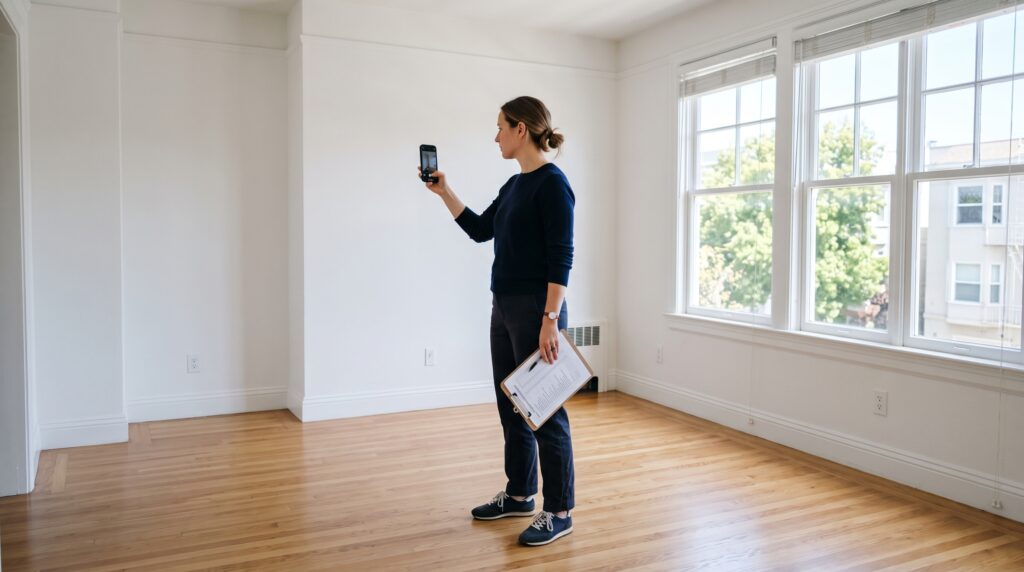
Most security-deposit disputes in San Diego are lost the day the tenant moves *in* — not the day they move out. When a tenant challenges a deduction, the case comes down to one question: can you prove the property’s condition before they took possession? A thorough, documented move-in inspection is the single piece of evidence that wins that argument every time. Since California capped most deposits at one month’s rent, that proof matters more than ever. Here is how to run the move-in inspection that makes deposit deductions defensible and disputes disappear.
Why do most deposit disputes come down to the move-in?
A deposit deduction is really a comparison: the property’s condition at move-out versus its condition at move-in. If you can only document the move-out, you have half the story — and half a story loses. The tenant says “it was already like that when I moved in,” and without a dated move-in record, you cannot prove otherwise. In a dispute, small-claims court, or a Civil Rights Department complaint, the burden falls on the landlord to justify each deduction with evidence.
The move-in inspection is what establishes the baseline. It’s the “before” photo that makes the “after” meaningful. Skip it, and every move-out deduction becomes an argument you’re positioned to lose. Do it well, and the deductions practically defend themselves.
What does a bulletproof move-in inspection include?
A move-in inspection is only as strong as its documentation. A defensible one includes:
- A written condition report, room by room, noting the state of walls, floors, ceilings, fixtures, appliances, counters, cabinets, windows, doors, and blinds — with specific notes on any existing wear, marks, or damage.
- Dated, comprehensive photos (and video) of every room and every notable surface, ideally with timestamps. Photograph the clean, empty unit thoroughly — more images, not fewer.
- Documented appliance and system function — that the stove, refrigerator, HVAC, plumbing, and safety devices work at move-in (which also ties into California’s 2026 habitability requirements).
- Tenant acknowledgment. The tenant reviews and signs the condition report, agreeing to the documented state of the unit at move-in. This is the linchpin — a signed baseline the tenant cannot later dispute.
- Secure storage of the report and media so it’s retrievable at move-out, potentially a year or more later.
The goal is a time-stamped, tenant-signed record that leaves no ambiguity about how the property looked before the tenancy began.
Why does the one-month deposit cap make this critical?
California’s AB 12 capped most security deposits at one month’s rent, which changed the stakes of move-in documentation. With a smaller cushion, you have less margin to absorb any damage — so recovering legitimate deductions from the deposit you *do* hold is more important, and every dollar has to be defensible.
Here’s the connection: a thinner deposit means you cannot afford to lose a dispute or fail to substantiate a deduction. The move-in inspection is what lets you confidently keep the portion of that one-month deposit needed for real, documented damage — and return the rest cleanly. Without the baseline, a challenged deduction on a smaller deposit is both more likely and more costly to lose.
How do you handle the move-out to match?
The move-in baseline only pays off if the move-out mirrors it. At move-out:
- 1. Conduct a move-out inspection using the same room-by-room format and photograph the same surfaces and angles as move-in.
- 2. Compare directly — put the move-in and move-out records side by side to identify genuine changes.
- 3. Distinguish damage from ordinary wear and tear. California law does not let you charge a tenant for normal wear (minor scuffs, light carpet wear, small nail holes); you can charge only for actual damage or excessive filth beyond normal use. The move-in/move-out comparison is exactly what proves the difference.
- 4. Itemize deductions in a written statement, supported by the paired photos and any repair invoices or estimates.
- 5. Return the deposit and itemized statement within California’s required timeline (generally 21 days). Missing the deadline can forfeit your right to deductions regardless of how well you documented them.
A move-out that maps one-to-one onto the move-in turns “trust me” into “here’s the proof.”
What’s the difference between damage and normal wear?
This distinction decides most disputes, so it’s worth being precise. Normal wear and tear is the expected deterioration from ordinary living — faded paint, minor scuffs, small nail holes, lightly worn carpet in traffic areas, minor wear on fixtures. You cannot deduct for these; they’re the cost of doing business as a landlord. Damage is harm beyond ordinary use — large holes, broken fixtures, pet destruction, stains, unapproved alterations, or filth requiring more than routine cleaning. You can deduct for these.
The reason the move-in inspection is so powerful here is that it lets you show a surface was *pristine* at move-in and *damaged* at move-out — converting a subjective “is this wear or damage?” debate into an objective, documented before-and-after. Attempting to deduct for normal wear is one of the fastest ways to lose a dispute and trigger penalties, so the documentation protects you from your own over-deducting as much as from the tenant.
Should you inspect during the tenancy too?
The move-in and move-out bookend the tenancy, but a periodic inspection in between strengthens your position further — and California specifically provides for one. Under state law, a tenant may request an initial move-out (pre-move-out) inspection before they vacate, giving them a chance to fix issues and avoid deductions; conducting it, with proper notice, both satisfies the law and documents condition close to the end. Beyond that, a routine mid-lease check (with the required written notice) catches developing problems early and adds another dated data point to your record.
These interim touchpoints do two things for deposit protection. First, they surface damage while it’s still small and while the tenant is present to explain or repair it, reducing surprises at move-out. Second, they build a documented timeline of condition — move-in, mid-lease, pre-move-out, move-out — that makes any eventual deduction almost impossible to dispute. The more dated evidence points you have between the “before” and the “after,” the more airtight the case for every deduction becomes.
What are the risks of skipping it?
Skipping or shortcutting the move-in inspection exposes you on multiple fronts: unwinnable disputes (no baseline to compare against), forfeited deductions you were legitimately owed, statutory penalties for improper deposit handling, and damaged tenant relationships when deductions feel arbitrary. On a one-month deposit, absorbing damage you couldn’t prove is a direct hit to your return. The move-in inspection takes an hour or two; the dispute it prevents can cost far more in lost deductions, penalties, and time.
Why does professional management make deposit disputes disappear?
Winning deposit disputes is a discipline of documentation executed consistently on every tenancy — a standardized move-in report, comprehensive dated photos, tenant sign-off, secure storage, a matching move-out, correct wear-versus-damage judgment, itemized deductions, and an on-time return. That’s a lot of moving parts to execute flawlessly under the time pressure of a turnover, and it’s exactly where self-managing owners cut corners and lose.
A professional manager runs the same rigorous move-in and move-out process on every unit, maintains the documentation, applies the wear-versus-damage standard correctly, itemizes deductions defensibly, and returns deposits within the legal timeline — every time. The result is that deposit disputes rarely happen, and when they do, they’re won on the evidence. For an owner working with a thinner one-month deposit, that consistency directly protects the return.
Frequently asked questions about move-in inspections and deposits
Do I legally need a move-in inspection in California?
It isn’t strictly mandatory the way the move-out process is, but skipping it leaves you without the baseline evidence to justify deductions. In practice, a documented, tenant-signed move-in inspection is your strongest protection in any deposit dispute.
How long do I have to return a security deposit in California?
Generally 21 days after the tenant moves out, along with an itemized statement of any deductions. Missing this deadline can forfeit your right to withhold any of the deposit.
Can I charge a tenant for normal wear and tear?
No. California only allows deductions for actual damage or cleaning beyond ordinary use — not for normal wear like minor scuffs, small nail holes, or lightly worn carpet. The move-in/move-out comparison proves which is which.
What documentation wins a deposit dispute?
A dated, room-by-room move-in condition report with comprehensive photos, signed by the tenant, paired with a matching move-out record and itemized deductions supported by invoices or estimates.
Does the one-month deposit cap change how I should document?
Yes — with less cushion under AB 12, every legitimate deduction matters more and must be defensible. Thorough move-in documentation is what lets you confidently keep and justify the portion of a smaller deposit needed for real damage.
Win the dispute before it starts
Deposit disputes aren’t won with a good argument at move-out — they’re won with good evidence gathered at move-in. A thorough, dated, tenant-signed move-in inspection turns every future deduction into a documented before-and-after that defends itself, protects the return on a thinner one-month deposit, and makes most disputes evaporate before they begin. It’s an hour of work that pays for itself the first time a tenant says “it was already like that.”
If you want every tenancy documented to a standard that wins disputes, request a free rental analysis from Three Palms Rental Management. We run rigorous, photo-documented move-in and move-out inspections on every unit and handle deposit returns on time and by the book — so your deductions hold up and disputes disappear.
