

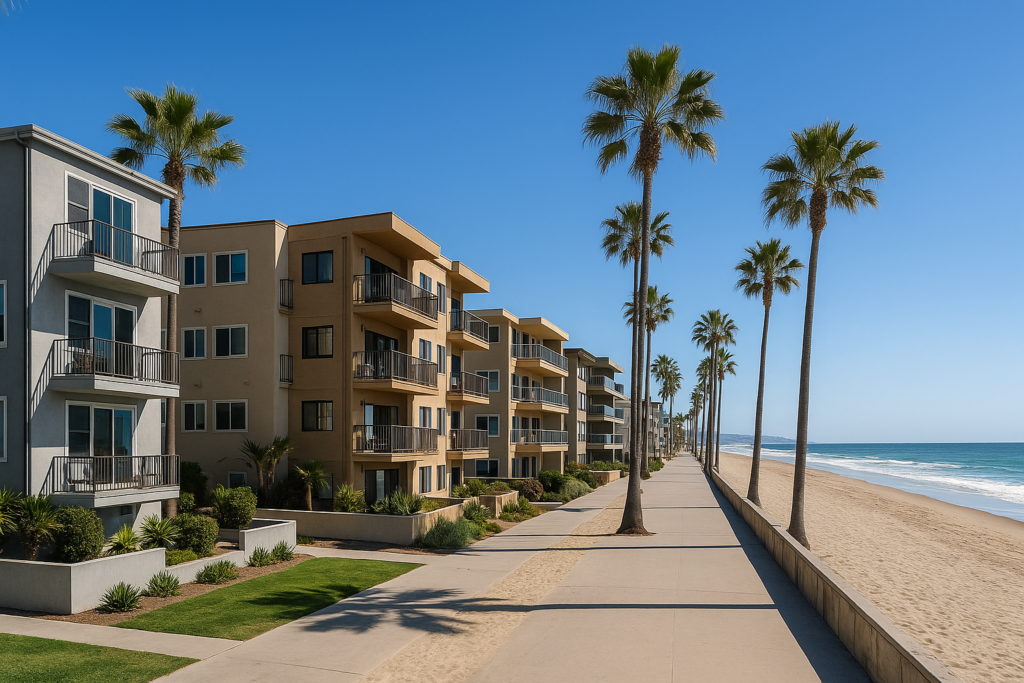
San Diego’s short-term rental crackdown did something few investors expected: it may have quietly made Pacific Beach *long-term* rentals more valuable. As the city caps and licenses vacation rentals, a slice of PB’s most desirable coastal inventory is being pushed out of the nightly market, and the owners and investors who pivot to long-term or mid-term leasing are positioned to capture the demand that has nowhere else to go. This report breaks down what the STR rules mean for Pacific Beach, why the crackdown could be a long-term opportunity, and how to underwrite a PB rental in the new environment.
What is San Diego’s short-term rental crackdown?
For years, Pacific Beach ran on vacation rentals, a huge share of its coastal housing operated as nightly Airbnb-style inventory. San Diego responded with a Short-Term Residential Occupancy (STRO) licensing framework that regulates and limits how many whole-home short-term rentals can legally operate. The system uses tiered licenses, caps the number of whole-home STR licenses citywide, and treats the beach communities, including Mission Beach and the greater Pacific Beach area, as their own tightly managed markets.
The practical effect is scarcity by design. Not every owner who wants to run a nightly rental can get a license, and the ones who cannot must either sit out or convert to a longer-term strategy. That is a fundamental change to how PB’s housing stock gets used, and fundamental changes create winners.
Why could the crackdown be a long-term rental goldmine?
The logic is straightforward supply-and-demand. Pacific Beach’s appeal, the sand, the boardwalk, the walkable coastal lifestyle, has not changed. What is changing is how much of its housing can legally chase nightly tourists. When the city limits short-term licenses, several things follow that favor long-term owners:
- Coastal inventory shifts to the long-term pool. Owners without a viable STR path convert desirable, well-located units to long-term or mid-term rentals, and those are premium units in a premium location.
- Long-term demand stays strong. People want to *live* in Pacific Beach year-round, young professionals, remote workers, healthcare staff, and lifestyle renters who value the coast. That demand is deep and stable.
- Less nightly churn, more stability. A neighborhood tilting from transient vacationers toward year-round residents tends to see steadier occupancy and lower turnover for long-term owners.
The owner who reads the shift early, repositioning a PB property as a high-quality long-term or mid-term rental, can capture premium coastal rent with far less operational chaos than the nightly grind, and with none of the licensing uncertainty.
What does this mean for a Pacific Beach investor?
For the analytical investor, the crackdown reframes the PB thesis. The old play was “buy a beach unit, maximize nightly revenue.” The new play is more durable: buy a well-located coastal unit and operate it as a premium long-term or mid-term rental, capturing the demand displaced from the shrinking short-term pool.
That has real advantages. Long-term and mid-term leasing offers predictable monthly income, dramatically lower turnover and cleaning costs, and freedom from the licensing lottery and regulatory risk that now shadow the nightly market. It trades the theoretical high of peak-season nightly rates for a steadier, more bankable return, and in a market where the city is actively constraining the nightly option, steadier is also safer.
How should you underwrite a Pacific Beach rental now?
Underwrite the property for what it can reliably do in the current rules, not for the nightly revenue it might have earned in the old ones.
Anchor to long-term (and mid-term) rent
Base your model on realistic long-term rent for a comparable PB coastal unit, and consider a mid-term/furnished strategy as an upgrade path, PB draws traveling professionals and seasonal tenants who will pay a premium for a furnished coastal home on a monthly lease. That blends stability with a higher rate than a bare 12-month lease.
Verify the STR status before you assume it
If any part of your thesis depends on short-term use, confirm the property’s actual licensing eligibility under the current STRO rules before you buy. Assuming you can run a nightly rental, and discovering you cannot, is the single most expensive mistake in the new PB market.
Model the coastal-asset realities
PB’s coastal environment means salt-air wear, higher maintenance, and, for multifamily, balcony and exterior-element compliance. Budget for the upkeep a beach property actually demands, not a best case.
Respect the tenant-protection framework
A long-term PB rental is fully subject to California’s rent cap and San Diego’s just-cause protections. Price and operate within those rules from day one.
How does Pacific Beach compare to other San Diego beach markets?
The STR shift is not uniform across San Diego’s coast, and understanding the differences sharpens the PB thesis. Mission Beach, PB’s immediate neighbor, has historically been the densest vacation-rental market in the city and is treated as its own tightly managed zone under the STRO rules, which concentrates the same supply pressure. Ocean Beach carries a distinct, more bohemian character and a fiercely local, year-round community that has always supported strong long-term demand. La Jolla sits at a higher price point, drawing a more affluent long-term and executive-relocation tenant.
Pacific Beach’s edge is its blend: it is coastal and lively enough to command a premium, broad enough in its tenant base, young professionals, students, military, remote workers, to fill long-term units reliably, and central enough to stay in demand year-round. In a city constraining nightly rentals everywhere along the coast, PB offers one of the deepest and most diversified long-term tenant pools to absorb the displaced inventory. That diversification is exactly what makes the long-term pivot more durable here than in a market that lives or dies on tourism alone.
What are the risks of the pivot?
The long-term thesis is sound but not free of risk. Regulatory change cuts both ways: STR rules can evolve again, so build your plan on the long-term fundamentals rather than betting on a specific future ruleset. Acquisition pricing still matters: PB’s desirability is priced in, and overpaying for the coastal story erases the yield no matter how you operate. And a coastal asset’s operating costs are genuinely higher, so an honest expense model is essential. The pivot works because it rests on durable demand and the city’s own supply constraint, not because it is risk-free.
Why does professional management matter in the new PB market?
Repositioning a Pacific Beach property from nightly rental to premium long-term or mid-term leasing is exactly the kind of transition where professional management earns its keep. It means marketing the unit to the right coastal tenant, deciding between long-term and furnished mid-term based on real demand, screening rigorously, keeping the tenancy compliant with rent-cap and just-cause rules, and maintaining a coastal property to the standard that commands premium rent.
For owners caught in the STR transition, unsure whether they can license, unsure how to reposition, and facing higher upkeep than they budgeted, a manager turns a regulatory headache into a clean, stable, income-producing asset. In a market the city is actively reshaping, that operational clarity is the difference between capturing the opportunity and getting caught by the change.
Frequently asked questions about Pacific Beach rentals
Can I still run a short-term rental in Pacific Beach?
Only with a valid license under San Diego’s STRO framework, which caps and tiers whole-home short-term rentals and manages the beach communities tightly. Availability is limited, so confirm eligibility for a specific property before relying on nightly income.
Why would the STR crackdown help long-term landlords?
Because it shifts desirable coastal inventory out of the nightly market and into the long-term pool while year-round demand to live in PB stays strong. Constrained short-term supply plus durable long-term demand favors long-term owners.
Is a long-term rental less profitable than an Airbnb in Pacific Beach?
Per night, nightly rates can be higher in peak season, but long-term and mid-term leasing offers predictable income, far lower turnover and operating costs, and no licensing risk, often a stronger risk-adjusted return in the current environment.
What is a mid-term rental and does it work in PB?
A furnished lease of roughly one to six months. Pacific Beach draws traveling professionals, healthcare workers, and seasonal residents who pay a premium for a furnished coastal home, making mid-term a strong middle path between nightly and annual leasing.
What should I check before buying a PB rental to run short-term?
Confirm the property’s actual STRO licensing eligibility under current rules before purchase. Do not assume nightly use is available, verify it, because the assumption is the costliest mistake in the new market.
Read the shift, capture the coast
San Diego’s short-term rental crackdown did not diminish Pacific Beach, it changed who profits from it. As nightly inventory is capped and licensed, premium coastal units are moving into the long-term and mid-term pool, right as year-round demand to live at the beach stays strong. The investor who repositions early, underwrites the property for its real long-term potential, verifies the rules, and operates to a coastal standard is the one who turns the crackdown into a durable advantage.
If you own, or are eyeing, a Pacific Beach rental and want to know what it can earn as a long-term or mid-term property in today’s rules, request a free rental analysis from Three Palms Property Management. We will model the real rent, verify the regulatory picture, and position your coastal asset to capture the demand the crackdown is creating.
